
Cave Gymnasium
Want to practice what you've read from the best of ancient Greek literature? Looking for wisdom? A plan of life? Ways to practice?
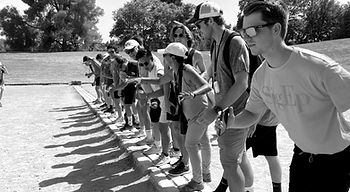

Join the race! Train with the best of ancient Greek literature. Train by yourself. With another. With a group. Whatever you do, get into the Cave Gymnasium and train, practice, exercise!
Why train?
As Diogenes of Sinope puts it: "Absolutely nothing in life is successful without training. … Training has the power to conquer anything."
Crates of Thebes frames the point in terms of happiness: "Long is the path that leads to happiness through words alone [reading or talking]. But the path that leads to happiness through the practice of daily deeds is short."
To learn more about why the ancient Greeks believed in and promoted practice over reading and talking alone, and why the Cave likewise emphasizes practice, go here.
What to do now?
-
Go to the Gymnasium Categories and Contents below or scroll and click on the cover of a book or a link to a school of philosophy or a topic you want to train with.
-
Most Cave gymnasiums include workouts, a plan of life, points of wisdom, and sparks (conversation starters). Best of luck!
-
If you prefer to read for now instead of train, go to the Cave Library (here).
Note - The Cave is in the process of adding content to the Cave Gymnasium. It's an ongoing task, so thanks for your patience in advance! For now, enjoy content from the following nine Cave books (authors, schools of philosophy, topics). If you prefer to purchase a book, go to Cave Books (here).
Gymnasium Categories and Contents
Plans of Life, Points of Wisdom, Sparks (Conversation Starters), Workouts
Plans of Life, Points of Wisdom, Sparks (Conversation Starters), Workouts
Why reading is only the beginning
Related to Education or Literature & Exercise, Training & Practice
Note - In time we hope to add the following categories:
Know Yourself Practice
Following the ancient Greek "Know Thyself" (gnōthi seauton) Imperative
Ask the Ancient Greeks
Ask a question, get an answer, practice, and repeat
Wisdom & Practice by …
- Author (Book)
- Schools of Philosophy
- Topic
Plans of Life, Points of Wisdom, Sparks (Conversation Starters), Workouts
- Practice by Author (Book) -
Scroll for the author or book you'd like to practice with or get wisdom from. Click on its cover to go to its Gymnasium contents page.


Other Best of Series
Content to Come . . .
Homeric Hymns
Lyric and other poetry
Herodotus
Thucydides
Aeschylus
Sophocles
Euripides
Presocratics
Plato
Aristotle
Epictetus
Plotinus
- Practice by Philosopher or School of Philosophy -
Scroll for the philosopher or school of philosophy you'd like to practice with or get wisdom from. Click on the philosopher/school to go to its Gymnasium page.
-
Cynics - Cynicism - Antisthenes, Diogenes of Sinope, Crates of Thebes & Others
-
Epicurus - Epicureanism - Epicurus
-
Early Stoics - Early Stoicism - Zeno of Citium, Cleanthes of Assos, Chrysippus of Soli & Others
- Practice by Topic -
If you'd like to go straight to a workout that focuses on a topic, scroll for the topic you'd like to practice and click on the topic (for example, Managing Anger) to go to its Gymnasium item page.
-
Observing Emotion (Homer). Go here.
-
Managing Anger (Homer). Go here.
-
Thinking for Yourself & Getting Advice (Hesiod). Go here.
-
Dealing with Procrastination & Laziness (Hesiod). Go here.
-
The Art of Endurance - Embracing Toil, Hardship & Suffering (Cynics). Go here.
-
Roles - Playing Your Assigned Role(s) Well (Cynics). Go here.
-
Human Existence - Seizing the Day & Practicing Joy (Epicurus). Go here.
-
Desire - Observing & Evaluating Different Kinds of Desire (Epicurus). Go here.
-
Doing Philosophy (Early Stoics). Go here.
-
Determining & Achieving the Goal(s) of Life (Early Stoics). Go here.
-
Making a Better Life Journey (Basil the Great). Go here.
-
Collecting Beneficial Knowledge or Wisdom (Basil the Great). Go here.
-
Striving to Be the Best (Aretē). Go here.
-
Determining & Practicing My Roles-Functions-Virtues (Aretē). Go here.
-
Doing Intentional Activity (Happiness). Go here.
-
Writing a Recipe for Happiness (Happiness). Go here.
More topics are on the way!
Please let us know any topics you'd like a workout for. The ancient Greeks covered most things (except for things like quantum physics or Big Foot). Write us at contact@theclassicscave.com. Thanks!
Practice Categories Explained
Plans of Life, Points of Wisdom, Sparks (Conversation Starters), Workouts
Plans of Life - As with any other plan, a plan of life is made to accomplish goals, whether many goals or one significant goal. Plans of life presented in the Cave Gymnasium consist of the most significant goals and practices inspired by an author, book, school of philosophy, or topic.
Points of Wisdom - Most of ancient Greek literature offers wisdom, whether practical wisdom or wisdom that is more theoretical. Covering many topics, Points of Wisdom presented in the Cave Gymnasium present wisdom relative to a topic or from an ancient Greek author, book, or school of philosophy.
Sparks (Conversation Starters) - Want to get a group talking? Or think through things by yourself? Cave Sparks ignite conversations, whether alone or with others.
Workouts - Answering the ancient Greek imperative to train, Cave Workouts offer a chance to think about a topic and practice.
The Significance of Practice in the Cave Gymnasium*
Why reading is only the beginning
You may have already noticed that we do more than read the best of ancient Greek literature in the Cave. In addition to reading, we actively work out with or do literature to become better human beings. This means we consider it on a deep level, engage in exercises relative to its major points, and, most importantly, practice something relevant to what we’ve read. We do this to obtain knowledge and grow in wisdom toward the ends of acquiring excellence or virtue (aretē) and forming good habits and character.
The goal of practice comes from the ancient Greeks themselves.
The Cynic Crates of Thebes, for instance, assures us that “long is the path that leads to happiness through words alone [reading or talking]. But the path that leads to happiness through daily deeds is short.”
The Stoic philosopher Epictetus points out the absurdity of reading or mastering knowledge without practice. “Suppose, for example,” he says, “that in talking to a boxer, I said, ‘Show me the muscles of your arms and shoulders,’ and in reply, the man said, ‘Look at my weights.’ ‘No,’ I would say, ‘I want to see the effects of the weights.’ So, when you say, ‘I’ve read this work and mastered it,’ my response is, ‘Slavish fellow! I’m not asking about this work, but how it is that you exercise the powers of choice and refusal, desire and aversion. Do you do so in accord with nature or not? If so, then give me evidence of it, and I will declare that you are making progress.’“
(See below here for more ancient Greek testimonies regarding practice.)
More recently, the philosopher and historian of philosophy Pierre Hadot has argued that, in the ancient world, philosophy was a “way of life”; it was about doing “exercises … intended to generate a transformation in the subject practicing them.”
In the Cave, we generalize “philosophy” to all ancient Greek literature (poetry, drama, history, dialogues, prose, etc.). Therefore, literature itself can be or is a way of life and can be or is about practice, the application of literature to our own lives—something the ancient Greeks promoted and did.
To give one example from the late fifth century BC, Niceratus, the son of the famous general Nicias of Athens, says the following about his practice of Homer's Iliad and Odyssey: "My father had me learn every word of Homer … to see me develop into a good man." This "development" surely requires practice.
So, what can we do? Let’s hit the workout machines (as it were) in the Cave Gymnasium. What’s the purpose of each? They prompt us to consider and apply significant points from whatever we’ve read to our own lives. They challenge us to evaluate our lives in terms of a topic or idea from the same. Finally, they encourage us to act—to do something concrete and specific with what we’ve learned.
With this in mind, enjoy all the workouts! You’ll find them well worth your effort!
*The word gymnasium comes from the Greek word for “naked” or “unclad” (gymnos). Bare yourself, then, in doing the workouts.
Ancient Greek (and Roman) Testimonies
Related to Education or Literature & Exercise, Training & Practice
“Those who are making still more and more progress while reading poetry, history, and philosophy, are always able to derive benefit not only from what is said but also from what is seen and done, and to gather what is appropriate and useful therefrom. … The transformation of our judgments into deeds and not allowing our words to remain mere words but to make them into actions, is, above all else, a specific mark of progress. An indication of this is, in the first place, the desire to imitate what we praise and eagerness to do what we admire.”—Plutarch
“My father had me learn every word of Homer … to see me develop into a good man.”—Niceratus of Athens
“Absolutely nothing in life is successful without training. … Training has the power to conquer anything.”—Diogenes of Sinope
“Long is the path that leads to happiness through words alone. But the path that leads to happiness through daily deeds is short.”—Crates of Thebes
“We must practice those things that produce happiness. … Take thought of and practice these matters and related precepts day and night, both by yourself and with others who are like minded.”—Epicurus
“The cultivation of the mind is the noblest and worthiest of pursuits. We should urge our young men … to embrace an education and training of this sort.”—Isocrates
“Train yourself with self-imposed toils and hardships so that you may be able to endure those that are contrary to your choosing.”—Isocrates
“Great is the power that is supplied by goal-oriented practices. … We should see our lives in terms of athletic contests for which competitors prepare themselves with practice exercises.”
—Basil of Caesarea
“When you say, ‘I’ve read this work and mastered it,’ my response is, ‘Slavish fellow! I’m not asking about this work, but how it is that you exercise the powers of choice and refusal, desire and aversion. … Give me evidence of the quality of your practice, and I will declare that you are making progress.’”—Epictetus
“What chiefly makes the study of history wholesome and profitable is this, that you behold the lessons of every kind of experience set out as on a conspicuous monument. From these you may choose for yourself and for your own state what examples to imitate. You may also choose what examples to avoid imitating—what is shameful from beginning to end.”—Livy
“Throughout our entire treatise, … we have justly praised good men for their noble deeds and criticized base men whenever they have missed the mark. We believe that, by this means, we will lead men whose nature fortunately inclines them to excellence to undertake … the noblest deeds, whereas by appropriate criticism we will turn men of the opposite character from their impulse to vice.”—Diodorus Siculus